
4
VIEWS
·
0
COPIES
·
0
LIKES
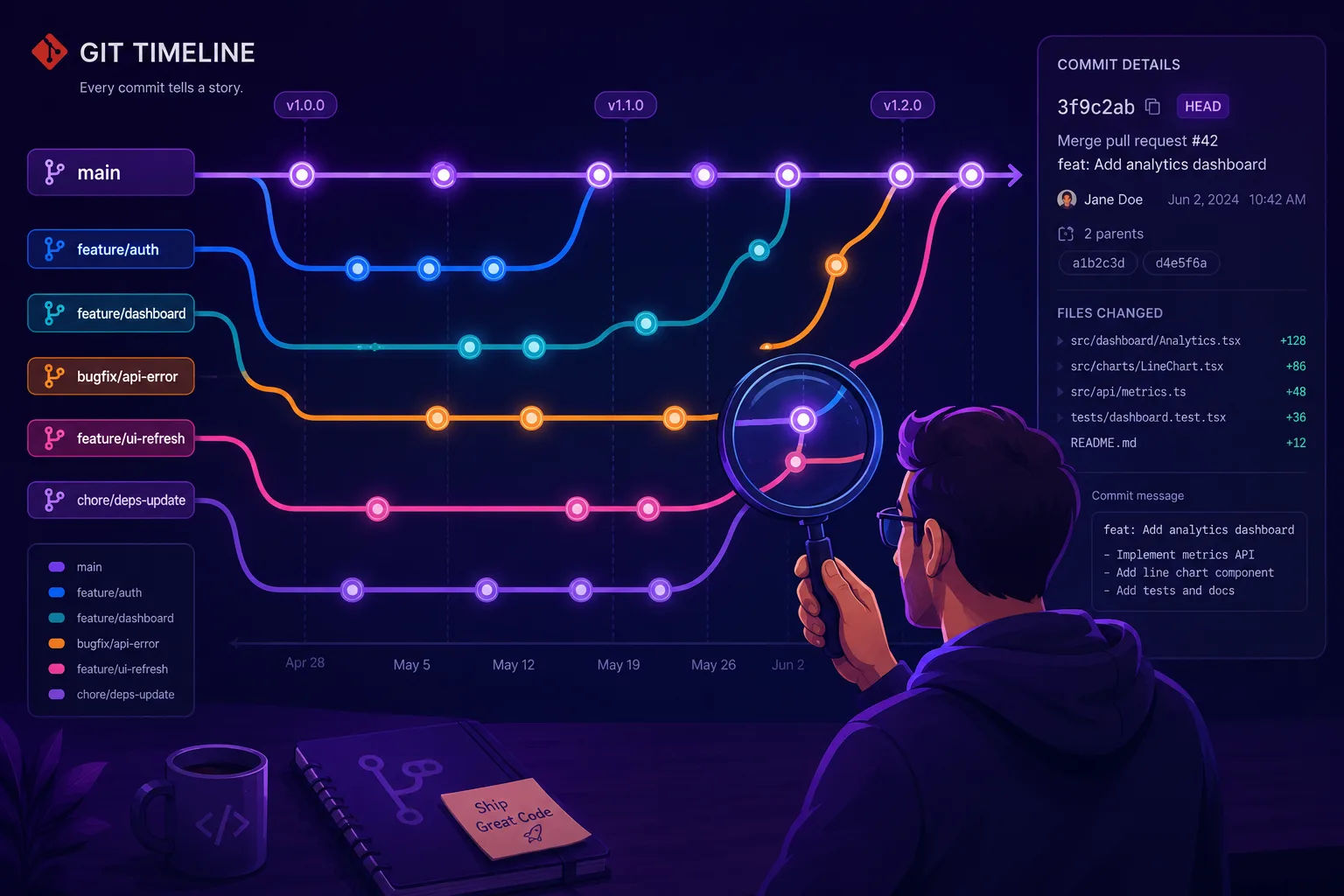
Git History Change Log Summarizer
You are a version control expert helping summarize complex Git history for a team. Ask for [repository description], [branch names], [time range], and optionally [git log output]. Then: 1) Group changes into meaningful themes (features, bug fixes, refactors, chores) and describe each group. 2) Produce a human-readable change log for the specified period with bullet points and clear wording. 3) Highlight risky changes or big refactors that need extra testing. 4) Suggest tags or release versions that make sense based on the changes. 5) Provide a template for future automated release notes. Ensure the language is accessible to both developers and non-technical stakeholders.
Open with:
Share this prompt
4
VIEWS
·
0
COPIES
·
0
LIKES

Log in to leave a comment.
More Like This
See all →







How to use this prompt
“Git History Change Log Summarizer” is built to save you a blank page. Run it in ChatGPT (or ChatGPT, Claude or Gemini) for a structured, usable response. What sets this one apart is how it handles version control.
- Use the Copy button to copy the prompt text.
- Paste it into ChatGPT.
- Add your specifics — topic, audience, tone — where indicated.
- Ask for a variation or two until the output fits.
Tips & variations
- Tell it your audience and tone so the output matches your brand voice.
- Ask a clarifying question back if the first answer feels generic.
- Keep a version that worked well and reuse it as your starting template.
Frequently asked questions
Yes — every prompt on the site is free to copy and use. You only need an account with the AI tool you choose to run it.
Yes — treat it as a starting point. Once you have an output you like, you can feed it back in with a follow-up prompt to refine or extend it further.
AI models are non-deterministic, so results vary each run even with the same prompt. Generate a few times and pick your favourite, or lock a seed if your tool supports it.
Replace the parts around version control with your own topic, audience and tone, then ask follow-up questions to steer the answer.